How to Choose the Right Online MPP Program in Virginia
Selecting the right online Master of Public Policy program is a decision that shapes your career trajectory for years to come. Virginia offers a small but distinguished set of options, and the differences between them matter more than you might expect. Here are the criteria that should guide your evaluation.
Start With NASPAA Accreditation
The Network of Schools of Public Policy, Affairs, and Administration (NASPAA) is the gold standard accreditor for public policy and public administration programs. Think of it as the AACSB equivalent for business schools. A NASPAA-accredited program signals that the curriculum, faculty qualifications, and student outcomes have been independently reviewed and meet rigorous professional standards. If you plan to work in government, nonprofits, or policy research organizations, many employers recognize NASPAA accreditation as a mark of quality. Always confirm a program's accreditation status before applying.
Match Specializations to Your Career Goals
Virginia's MPP programs tend to offer distinct concentrations, from health policy and education policy to national security and data analytics. Rather than defaulting to the most prestigious name on the list, map each program's specialization options against the policy area where you want to build expertise. A program with a strong national security concentration, for example, may be ideal if you plan to work in defense or intelligence policy, while a health policy track better serves someone headed toward state Medicaid administration or hospital systems advocacy. Alignment between your concentration and your target career field significantly improves your return on investment.
Evaluate Total Cost and Return on Investment
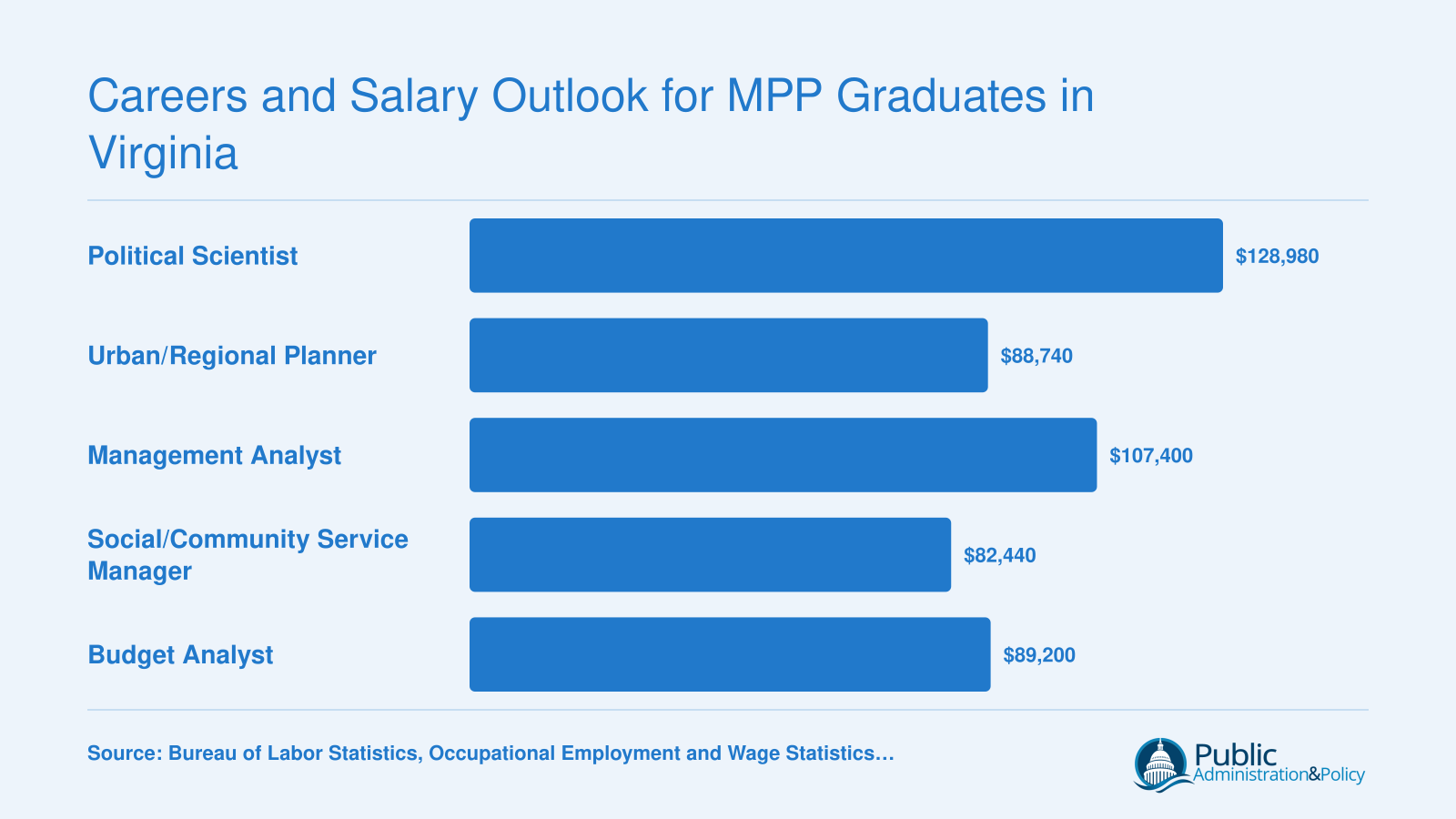
Tuition is only one part of the equation. Factor in fees, required residencies, and any travel costs for in-person components. Then weigh total cost against outcomes: What do graduates earn within a few years of completion? What percentage land positions in their target field? Programs that cost more but produce stronger employment outcomes and salary growth may actually deliver better value than a cheaper alternative with weaker placement records.
Scrutinize the Online Learning Experience
Not all online formats are created equal. Some programs offer live, synchronous sessions that allow real-time discussion with faculty and classmates, while others rely entirely on asynchronous coursework. Ask whether the program uses case-based instruction, policy simulations, or collaborative group projects. Also check whether career services, library resources, and academic advising are fully accessible to online students or primarily designed for those on campus.
Leverage Virginia's D.C. Proximity
Virginia's location adjacent to Washington, D.C. is a genuine competitive advantage for MPP students, but only if your program actively connects you to that ecosystem. Students who prefer to study in the capital itself may also want to explore online MPA programs Washington DC for additional options. Before you enroll, contact admissions offices and ask pointed questions:
- Capstone projects: Are students placed with real agencies, think tanks, or advocacy organizations in the D.C. metro area?
- Internship placements: Does the program facilitate internships with federal agencies, congressional offices, or policy research institutes?
- Alumni network: How active is the program's alumni community in D.C., and does it host networking events, mentorship pairings, or career panels?
- Employer partnerships: Does the program maintain formal relationships with organizations like the Government Accountability Office, Brookings Institution, or state-level agencies in Virginia?
A program that can demonstrate strong, tangible connections to D.C.-area employers transforms geographic proximity from a talking point into a career multiplier. Do not assume every Virginia-based program leverages this advantage equally. The ones that do can dramatically accelerate your entry into high-impact policy roles.