Tuition and Cost Comparison for Maryland Online Policy Programs
Understanding the full cost of an online policy degree is essential before you commit. Maryland offers a surprisingly affordable entry point compared to many national programs, but you need to look beyond the sticker price to get a realistic picture of what you will actually pay and what that investment yields over time.
McDaniel College: A Cost-Effective Online Option
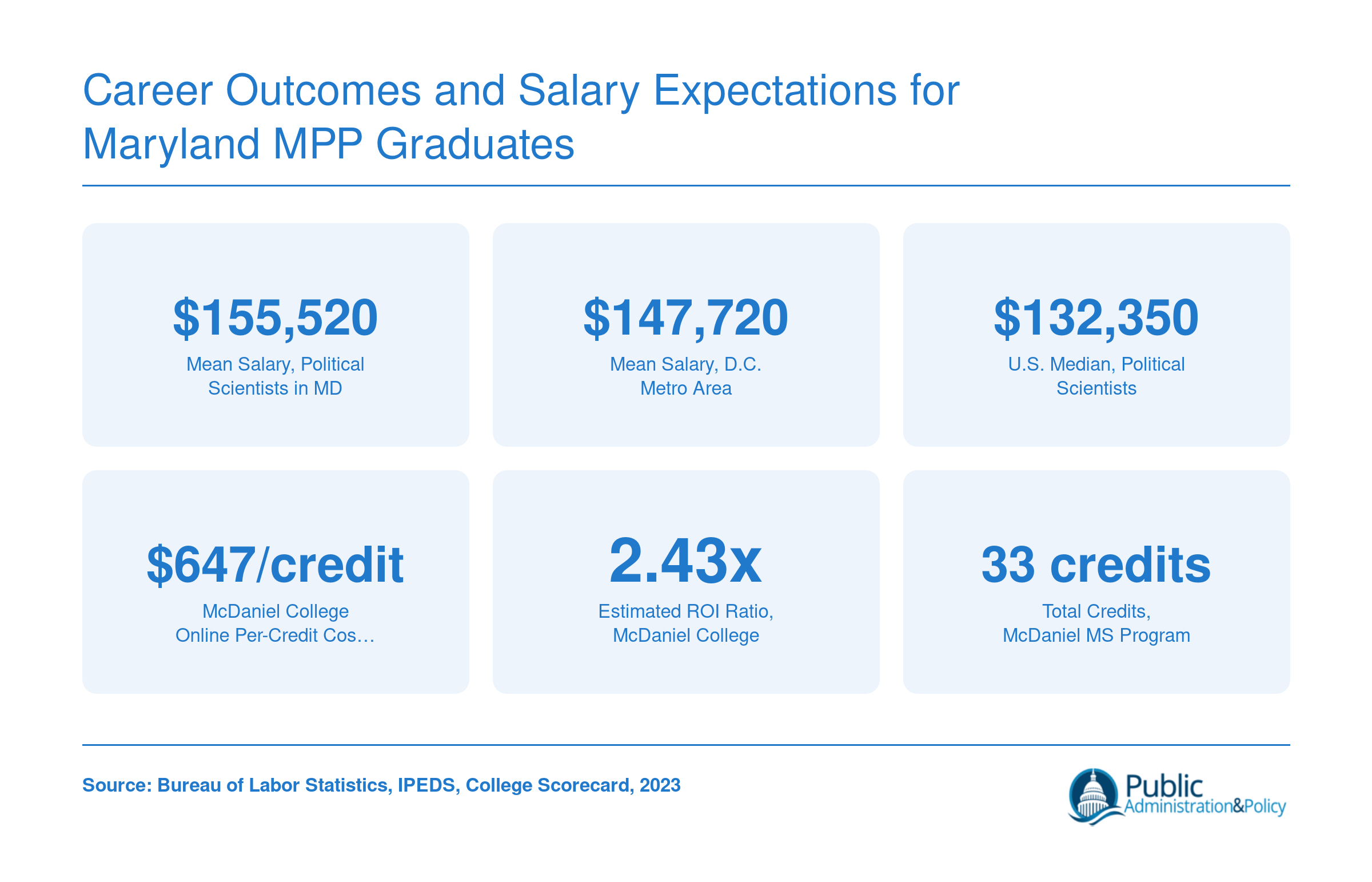
McDaniel College's online Public Administration and Policy M.S. stands out for its straightforward pricing. The program requires 33 credits at $647 per credit, bringing estimated graduate tuition to roughly $21,351 for the full degree. Importantly, McDaniel charges the same tuition rate regardless of residency, so out-of-state students pay no premium. That flat-rate structure is a significant advantage for distance learners who live outside Maryland but want to study at a Maryland institution.
The institution-wide net price at McDaniel, drawn from federal data, is approximately $21,916. Keep in mind that this figure reflects averages across all students and degree levels, so it serves as a rough benchmark rather than a precise estimate for graduate policy students. Your individual cost will depend on financial aid, employer benefits, and whether you attend full or part time.
Median institutional debt for McDaniel graduates is reported at $25,000, which is relatively modest for a master's degree. Program-level earnings and debt-to-earnings data are not yet available for this specific policy program, so a precise return-on-investment calculation is not possible at this time. However, the institution-wide median earnings figure of approximately $60,663 at ten years post-entry gives a general sense of graduate outcomes across all programs.
How Maryland Stacks Up Nationally
Online MPP and policy-adjacent master's programs across the country typically range from $25,000 to $60,000 in total tuition. McDaniel's estimated total of roughly $21,351 falls below even the lower end of that national band. That makes it one of the more affordable online policy degrees you will find, not just in Maryland but nationwide. Programs at large research universities, particularly those with NASPAA accreditation, often land in the $35,000 to $55,000 range. If you are also considering a master of public administration, many of those programs carry similar or higher price tags, so students who prioritize cost savings should weigh McDaniel's pricing seriously against those alternatives.
Financial Aid and Tuition Benefits Worth Exploring
Policy students often have access to funding sources that go beyond standard financial aid. Prospective students evaluating online MPA programs for Maryland students alongside MPP options should compare aid packages across both degree types. Here are several funding avenues to investigate:
- FAFSA: Filing the Free Application for Federal Student Aid is a necessary first step for accessing federal loans, and some institutions use it to determine eligibility for institutional grants as well.
- Federal employee tuition benefits: If you work for a federal agency, many offer tuition assistance or reimbursement programs that can cover a substantial portion of graduate study. Maryland's proximity to D.C. means a large share of prospective policy students may qualify.
- Graduate assistantships: While McDaniel's online format may not offer traditional assistantships, students considering hybrid or on-campus options at institutions like the University of Maryland or UMBC should ask about assistantship opportunities that offset tuition and provide stipends.
- Employer reimbursement: State and local government agencies, nonprofits, and some private-sector employers offer education benefits. Check whether your employer has a tuition reimbursement program before paying out of pocket.
- Scholarships for public service students: Several national organizations, including the National Academy of Public Administration and various policy-focused foundations, offer scholarships specifically for students pursuing public policy or public administration degrees.
Before committing to any program, request a personalized cost estimate from the admissions or financial aid office. Published tuition rates are a starting point, but your actual out-of-pocket cost could be meaningfully lower once aid, employer benefits, and tax credits are factored in.